

What is a Compliance Audit? What are the Benefits and Costs? and How Can TIAA Help you to Ensure Compliance?
Angela Ward – Director, Housing
It’s that time of year again which seems to come round ever so quickly. The purpose of this brief is to outline what an independent compliance audit is, why you need to have one and how to prepare for it, what the cost of non-compliance means for housing providers and how TIAA can help reduce the instances and therefore consequences of non-compliance.
All providers delivering affordable homes are eligible for audit and have a contractual obligation to engage with the process if selected for audit.
What is a compliance audit?
The compliance audit programme provides assurance that developing organisations are meeting Homes England’s requirements and the conditions of their grant-funding agreements, and that schemes are being delivered in line with the responsibilities contained in the Capital Funding Guide. The assurance is provided via an independent auditor who reports through to the developing organisation and Homes England at the same time.
Not all developing organisations are subject to compliance audit each year, but Homes England will notify you shortly if you have been selected in 2025. The Greater London Authority works to a slightly later timeframe. The schemes that are selected are those that may have completed in a previous financial year or are still on site where early assurance is required.
What do I need to do to prepare for it?
 The window from notification to the long-stop date for completion is actually quite tight if you want to take advantage of the four-week advance notice of the specific schemes to be audited and given that it falls predominantly in the summer holiday (for both your staff and the auditors!).
The first thing you need to do is to appoint your appropriately qualified independent auditor and agree the timeframe that you will work towards. You then need to access the Compliance Audit System in order to enter the Independent Auditor details and set an audit start date in the system. This will automatically generate an email to the Independent Auditor who must then access the system to self-certify that they are able to complete the audit.
Homes England have provided a training pack to assist you with this process in which they will stipulate the deadline date for setting up your compliance. This will help them support any providers who are struggling to access the system and ensure a timely start to the audit proper.
The cost of non-compliance
Let’s deal with the negative part first!
Where non-compliance is identified, Homes England assigns breaches based on the severity of the non-compliance – these are classed as low, medium and high severity. The number and level of breaches feed into the overall provider grade of green, amber or red. An amber or red breach signifies a higher risk and pretty much guarantees that you will be audited in the following year.
A serious misapplication of funds could also result in the grant being reclaimed.
An amber or red audit is also likely to incur the wrath of the Chief Executive and Chair of the Board as the report lands on their respective desks. It’s not where you want to be!
The benefits of compliance
But the positive side is so much more than the opposite of the negative side. Of course, it’s good to get over the line with a clean bill of health and you should receive acknowledgement of a job well done from those higher up.
The compliance audit exists to ensure that public money is used for its intended purpose but essentially it is underpinned by and helps to drive sound contract management practices and principles. These should apply to all schemes and not just those selected for audit – in any case, by the time a scheme has been selected, it’s often too late to set matters straight.
So having a structured framework for delivering development projects that protects your organisation’s investment as well as meeting Homes England / GLA requirements is sensible.

Ensuring Compliance – Common issues
Early on in our experience of undertaking compliance audits, it became apparent that the same issues and breaches were going to continue to repeat year after year unless the root cause of the issue was addressed.
Most organisations obtain a valuation prior to acquisition but the acquisition itself often takes longer than anticipated and the validity period of the valuation expires. The need to update the valuation is forgotten as the focus is on getting the deal over the line.
Contract documentation can remain unsigned and undated with the focus being on claiming start-on-site grant, often under pressure as year-end looms. This is an area that can lead to grant being recovered.
And then there is the perennial issue around rents. Development projects often span more than one financial year and rents change. Finance and/or Housing Management generally deal with rents and often press ahead applying rents that don’t correspond to what is in the financial appraisal for the scheme and ultimately what is in IMS. You’re heading for a breach.
Helping to reduce instances of non-compliance?
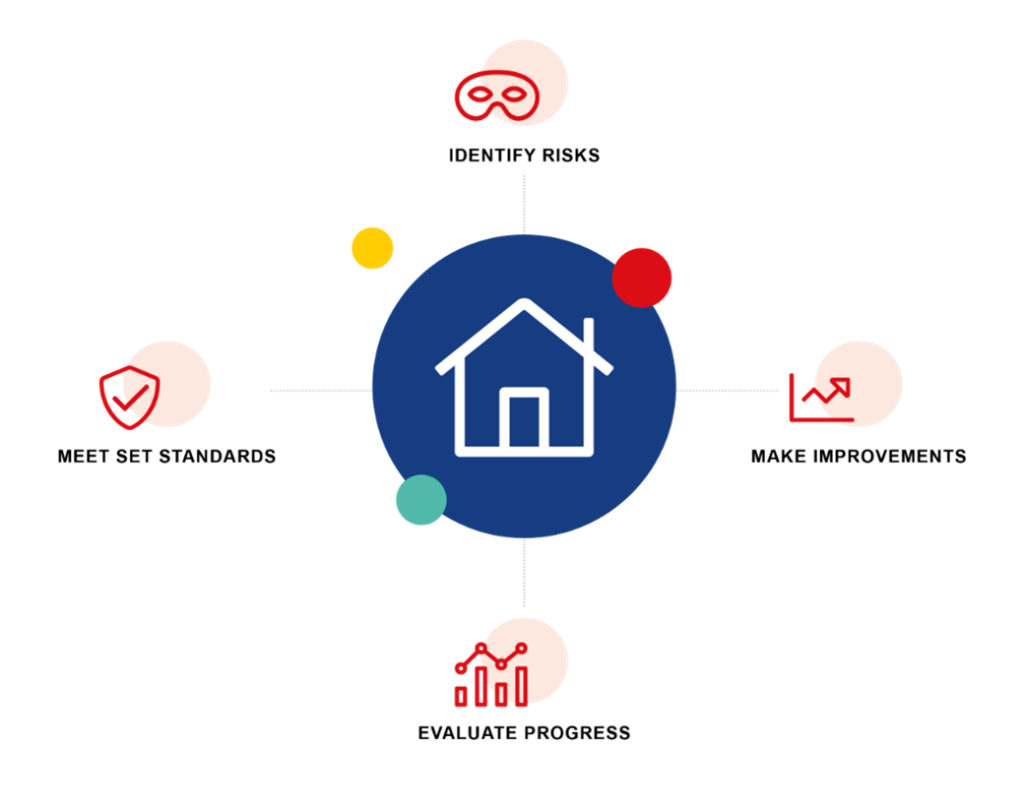
It’s quite simple really. It’s about having processes and procedures that are fit-for-purpose, that are understood and that are consistently applied. You should also look at it as actively managing project risks and ultimately risks to your organisation.
And it’s not just about meeting the requirements of the compliance audit. It’s about managing the risks of cost and time overruns, it’s about meeting delivery targets and it’s about satisfying demand.
Here at TIAA, we have worked proactively with our clients throughout the year to help them implement and improve their systems with the ultimate aim of having fit-for-purpose and joined up processes, which also satisfy the requirements of the compliance audit regime. Our ethos is about sharing best practice and recommending improvements to address those root causes. And by implementing them, your risks will be largely reduced.
In addition, many of our clients request a pre-compliance audit, focusing on those schemes that potentially could be selected by Homes England/GLA for audit.
 How can TIAA help?
We are very experienced in delivering this service and this can be demonstrated by our re-appointment as the independent auditor by many providers, year after year.
The audits (including Homes England compliance, GLA compliance and Strategic Partnerships Grant audits) will be delivered by a dedicated and experienced Compliance Audit team who understand the requirements and sometimes nuances of particular development schemes and the delivery of affordable housing. The team is well regarded and has a wealth of experience across the sector and in particular a robust understanding of the completion and requirements of Home England and the Greater London Authority. Angela and the team have worked with many registered providers, including G15.
If you are keen to discuss the compliance audit process in more detail and also how TIAA can help you through the course of your development programme then please contact the team.
Angela Ward – Director – Housing – angela.ward@tiaa.co.uk
Nick MacBeath – Director of Governance, Risk & Compliance – nick.macbeath@tiaa.co.uk
Find further information in our flyer – Compliance Audit Flyer